

Transaction Trends

Written by industry experts, get insights on payments like nowhere else.

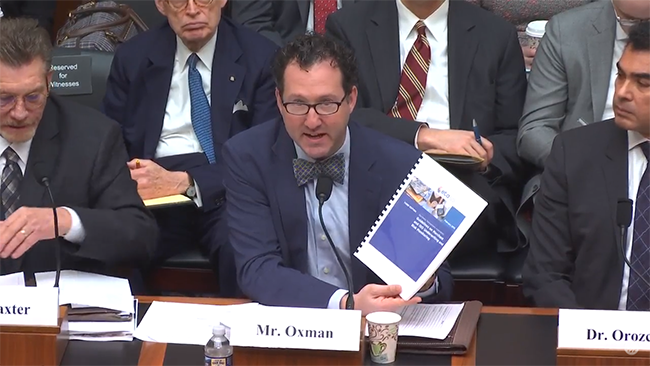
ETA CEO Jason Oxman Testifies on Capitol Hill, Touts Industry Efforts to Fight Fraud and Promote FinTech

2-15-2018
ETA CEO Jason Oxman Testifies on Capitol Hill, Touts Industry Efforts to Fight Fraud and Promote FinTech

ETA CEO Jason Oxman was on Capitol Hill this morning testifying before the House Financial Services Subcommittee on Financial Institutions of Consumer Credit on the ways that ETA members and the payments industry are fighting fraud and expanding the use of FinTech to benefit consumers and merchants.  

During the testimony, Oxman unveiled the 2018 update to ETA’s Guidelines on Merchant and ISO Underwriting and Risk Monitoring. The Guidelines provide a basis for payments companies to work cooperatively with federal regulators and law enforcement toward the common goal of stopping fraud. 

“For both back-end networks and systems, as well as consumer payment products, payments technology firms have heavily invested time and resources into ensuring data security,” Oxman said in his testimony. “The rate of fraud on payment systems is at remarkably low levels thanks to due diligence programs to prevent fraudulent actors from accessing payments systems.”  

In 2016, there was nearly $6 trillion in debit, credit, and prepaid card transactions in the United States, but there was only $9 billion in fraud, a fraction of a percent of overall transactions.  Consumers are not liable for fraudulent charges, so payments companies have a powerful incentive to continue the battle against criminal fraud. In addition, a recent survey of ETA members indicates that more than 10,000 merchants were discharged last year for fraud.  ETA worked closely with industry leaders and federal regulators like the Federal Trade Commission (FTC) to update ETA’s Guidelines which prioritize security and risk mitigation. New additions to the Guidelines include best practice updates that incorporate the Financial Crimes Enforcement Network’s new beneficial ownership rule.  

ETA and its member companies share a commitment to protecting consumers from harm and will continue to push for sensible policies and encourage policymakers to take a collaborative approach with our industry,” Oxman told Congressional lawmakers. “Operation Choke Point, for example, employed the wrong legal tools, was unnecessary confrontational, and created serious risks to law abiding processors and merchants without producing any benefits to consumers.  The blunt force of Operation Choke Point discouraged banks and other financial services providers form forming relationships with merchants or other business in certain retail categories, leading to the ‘de-risking’ of entire industries.” 

Oxman fielded several questions from House Financial Services Committee members including Rep. Roger Williams, Rep. Keith Ellison, Rep. Al Green and Rep. Roger Pittenger. During the hearing, Oxman emphasized the importance of FinTech products and services in bringing financial services and commerce to underbanked and underserved consumers and merchants. He asked Congress to support collaborative policies that encourage the deployment of these technologies and discourage regulatory overreach that harms consumers.

Oxman also submitted written testimony. Click here to read Oxman’s written testimony, and click here to watch the full hearing.

About ETA

The Electronic Transactions Association (ETA) is the world’s leading advocacy and trade association for the payments industry. Our members span the breadth of significant payments and fintech companies, from the largest incumbent players to the emerging disruptors in the U.S. and in more than a dozen countries around the world. ETA members make commerce possible by processing approximately $56.75 trillion annually in purchases and P2P payments worldwide and deploying payments innovation to merchants and consumers.
 
ETAs membership spans the breadth of the payments industry to include independent sales organizations (ISOs), payments networks, financial institutions, transaction processors, mobile payments products and services, payments technologies, and software providers (ISV) and hardware suppliers. For more information, visit electran.org.

News

Is the Relationship Between Financial Institutions (FIs) And Fintechs Complicated? Not Anymore.

By Sumit Arora, Senior Vice President, Enterprise Payments Strategy, Wells Fargo Building a Balance Between Competition and Collaboration There is a long history between banking and technology, dating back to around 1866 when the telegraph . . .

6-16-2022

learn more


What business wants from the 2024 federal budget

News

‘Finclusion’ Gains Global Momentum

6-1-2022

learn more
ETA 2021 Canadian Policy Priorities

News

ETA 2021 Canadian Policy Priorities

Since 2018, ETA has provided our members a voice in Canada to advocate for policies that advance payments innovation to enable safe and secure commerce. Our efforts in 2021 will focus on the following policies . . .

1-20-2021

learn more

The payments industry is a powerful economic driver, creating high-paying jobs and contributing to GDP in every state while supporting a wide range of industries across the economy.

OREGON

  • 17,500 total employment
  • $1.7B total labor income
  • $2.7B total GDP contribution

To learn more, download the report.

The payments industry is a powerful economic driver, creating high-paying jobs and contributing to GDP in every state while supporting a wide range of industries across the economy.

MINNESOTA

  • 36,000 total employment
  • $3.6B total labor income
  • $5.8B total GDP contribution

To learn more, download the report.

The payments industry is a powerful economic driver, creating high-paying jobs and contributing to GDP in every state while supporting a wide range of industries across the economy.

MICHIGAN

  • 43,900 total employment
  • $3.8B total labor income
  • $5.8B total GDP contribution

To learn more, download the report.

The payments industry is a powerful economic driver, creating high-paying jobs and contributing to GDP in every state while supporting a wide range of industries across the economy.

MONTANA

  • 5,000 total employment
  • $400,000,000 total labor income
  • $700,000,000 total GDP contribution
  • To learn more, download the report.

The payments industry is a powerful economic driver, creating high-paying jobs and contributing to GDP in every state while supporting a wide range of industries across the economy.

NEBRASKA

  • 15,600 total employment
  • $1.4B total labor income
  • $2.2B total GDP contribution

To learn more, download the report.

The payments industry is a powerful economic driver, creating high-paying jobs and contributing to GDP in every state while supporting a wide range of industries across the economy.

NEVADA

  • 22,400 total employment
  • $1.9B total labor income
  • $3.2B total GDP contribution

To learn more, download the report.

The payments industry is a powerful economic driver, creating high-paying jobs and contributing to GDP in every state while supporting a wide range of industries across the economy.

NEW HAMPSHIRE

  • 6,400 total employment
  • $700,000,000 total labor income
  • $1.0B total GDP contribution

To learn more, download the report.

The payments industry is a powerful economic driver, creating high-paying jobs and contributing to GDP in every state while supporting a wide range of industries across the economy.

NEW JERSEY

  • 53,400 total employment
  • $6.4B total labor income
  • $8.2B total GDP contribution

To learn more, download the report.

The payments industry is a powerful economic driver, creating high-paying jobs and contributing to GDP in every state while supporting a wide range of industries across the economy.

NEW MEXICO

  • 5,900 total employment
  • $400,000,000 total labor income
  • $800,000,000 total GDP contribution

To learn more, download the report.

The payments industry is a powerful economic driver, creating high-paying jobs and contributing to GDP in every state while supporting a wide range of industries across the economy.

NORTH CAROLINA

  • 71,000 total employment
  • $7.1B total labor income
  • $13.9B total GDP contribution

To learn more, download the report.

The payments industry is a powerful economic driver, creating high-paying jobs and contributing to GDP in every state while supporting a wide range of industries across the economy.

NORTH DAKOTA

  • 4,600 total employment
  • $400,000,000 total labor income
  • $700,000,000 total GDP contribution

To learn more, download the report.

The payments industry is a powerful economic driver, creating high-paying jobs and contributing to GDP in every state while supporting a wide range of industries across the economy.

OHIO

  • 80,400 total employment
  • $6.9B total labor income
  • $16.6B total GDP contribution

To learn more, download the report.

The payments industry is a powerful economic driver, creating high-paying jobs and contributing to GDP in every state while supporting a wide range of industries across the economy.

OKLAHOMA

  • 18,600 total employment
  • $1.4B total labor income
  • $2.2B total GDP contribution

To learn more, download the report.

The payments industry is a powerful economic driver, creating high-paying jobs and contributing to GDP in every state while supporting a wide range of industries across the economy.

MISSISSIPPI

  • 10,100 total employment
  • $600,000,000 total labor income
  • $1.2B total GDP contribution

To learn more, download the report.

The payments industry is a powerful economic driver, creating high-paying jobs and contributing to GDP in every state while supporting a wide range of industries across the economy.

PENNSYLVANIA

  • 64,500 total employment
  • $6.3B total labor income
  • $9.7B total GDP contribution

To learn more, download the report.

The payments industry is a powerful economic driver, creating high-paying jobs and contributing to GDP in every state while supporting a wide range of industries across the economy.

RHODE ISLAND

  • 5,800 total employment
  • $500,000,000 total labor income
  • $900,000,000 total GDP contribution

To learn more, download the report.

The payments industry is a powerful economic driver, creating high-paying jobs and contributing to GDP in every state while supporting a wide range of industries across the economy.

SOUTH CAROLINA

  • 22,500 total employment
  • $1.7B total labor income
  • $2.7B total GDP contribution

To learn more, download the report.

The payments industry is a powerful economic driver, creating high-paying jobs and contributing to GDP in every state while supporting a wide range of industries across the economy.

SOUTH DAKOTA

  • 15,300 total employment
  • $1.1B total labor income
  • $3.2B total GDP contribution

To learn more, download the report.

The payments industry is a powerful economic driver, creating high-paying jobs and contributing to GDP in every state while supporting a wide range of industries across the economy.

TENNESSEE

  • 38,800 total employment
  • $3.5B total labor income
  • $5.5B total GDP contribution

To learn more, download the report.

The payments industry is a powerful economic driver, creating high-paying jobs and contributing to GDP in every state while supporting a wide range of industries across the economy.

UTAH

  • 28,700 total employment
  • $2.4B total labor income
  • $4.9B total GDP contribution

To learn more, download the report.

The payments industry is a powerful economic driver, creating high-paying jobs and contributing to GDP in every state while supporting a wide range of industries across the economy.

VERMONT

  • 2,600 total employment
  • $200,000,000 total labor income
  • $300,000,000 total GDP contribution

To learn more, download the report.

The payments industry is a powerful economic driver, creating high-paying jobs and contributing to GDP in every state while supporting a wide range of industries across the economy.

VIRGINIA

  • 73,600 total employment
  • $8.5B total labor income
  • $12.8B total GDP contribution

To learn more, download the report.

The payments industry is a powerful economic driver, creating high-paying jobs and contributing to GDP in every state while supporting a wide range of industries across the economy.

WASHINGTON

  • 34,000 total employment
  • $4.6B total labor income
  • $7.8B total GDP contribution

To learn more, download the report.

The payments industry is a powerful economic driver, creating high-paying jobs and contributing to GDP in every state while supporting a wide range of industries across the economy.

WEST VIRGINIA

  • 4,800 total employment
  • $300,000,000 total labor income
  • $600,000,000 total GDP contribution

To learn more, download the report.

The payments industry is a powerful economic driver, creating high-paying jobs and contributing to GDP in every state while supporting a wide range of industries across the economy.

WISCONSIN

  • 28,100 total employment
  • $2.4B total labor income
  • $4.0B total GDP contribution

To learn more, download the report.

The payments industry is a powerful economic driver, creating high-paying jobs and contributing to GDP in every state while supporting a wide range of industries across the economy.

WYOMING

  • 2,500 total employment
  • $200,000,000 total labor income
  • $300,000,000 total GDP contribution

To learn more, download the report.

The payments industry is a powerful economic driver, creating high-paying jobs and contributing to GDP in every state while supporting a wide range of industries across the economy.

HAWAII

  • 4,900 total employment
  • $400,000,000 total labor income
  • $700,000,000 total GDP contribution

To learn more, download the report.

The payments industry is a powerful economic driver, creating high-paying jobs and contributing to GDP in every state while supporting a wide range of industries across the economy.

TEXAS

  • 209,100 total employment
  • $20.0B total labor income
  • $29.8B total GDP contribution

To learn more, download the report.

The payments industry is a powerful economic driver, creating high-paying jobs and contributing to GDP in every state while supporting a wide range of industries across the economy.

ALABAMA

  • 21,000 total employment
  • $1.6B total labor income
  • $2.8B total GDP contribution

To learn more, download the report.

The payments industry is a powerful economic driver, creating high-paying jobs and contributing to GDP in every state while supporting a wide range of industries across the economy.

ALASKA

  • 2,200 total employment
  • $200,000,000 total labor income
  • $400,000,000 total GDP contribution

To learn more, download the report.

The payments industry is a powerful economic driver, creating high-paying jobs and contributing to GDP in every state while supporting a wide range of industries across the economy.

ARIZONA

  • 63,600 total employment
  • $5.6B total labor income
  • $8.5B total GDP contribution

To learn more, download the report.

The payments industry is a powerful economic driver, creating high-paying jobs and contributing to GDP in every state while supporting a wide range of industries across the economy.

ARKANSAS

  • 12,000 total employment
  • $900,000,000 total labor income
  • $1.6B total GDP contribution

To learn more, download the report.

The payments industry is a powerful economic driver, creating high-paying jobs and contributing to GDP in every state while supporting a wide range of industries across the economy.

CALIFORNIA

  • 193,800 total employment
  • $26.6B total labor income
  • $41.1B total GDP contribution

To learn more, download the report.

The payments industry is a powerful economic driver, creating high-paying jobs and contributing to GDP in every state while supporting a wide range of industries across the economy.

COLORADO

  • 40,000 total employment
  • $4.2B total labor income
  • $6.2 total GDP contribution

To learn more, download the report.

The payments industry is a powerful economic driver, creating high-paying jobs and contributing to GDP in every state while supporting a wide range of industries across the economy.

CONNECTICUT

  • 16,400 total employment
  • $2.1B total labor income
  • $3.3B total GDP contribution

To learn more, download the report.

The payments industry is a powerful economic driver, creating high-paying jobs and contributing to GDP in every state while supporting a wide range of industries across the economy.

DELAWARE

  • 38,400 total employment
  • $4.0B total labor income
  • $9.3B total GDP contribution

To learn more, download the report.

The payments industry is a powerful economic driver, creating high-paying jobs and contributing to GDP in every state while supporting a wide range of industries across the economy.

DISTRICT OF COLUMBIA

  • 4,200 total employment
  • $800,000,000 total labor income
  • $1.1B total GDP contribution

To learn more, download the report.

The payments industry is a powerful economic driver, creating high-paying jobs and contributing to GDP in every state while supporting a wide range of industries across the economy.

FLORIDA

  • 161,100 total employment
  • $14.5B total labor income
  • $18.5B total GDP contribution

To learn more, download the report.

The payments industry is a powerful economic driver, creating high-paying jobs and contributing to GDP in every state while supporting a wide range of industries across the economy.

GEORGIA

  • 70,700 total employment
  • $6.6B total labor income
  • $12.7B total GDP contribution

To learn more, download the report.

The payments industry is a powerful economic driver, creating high-paying jobs and contributing to GDP in every state while supporting a wide range of industries across the economy.

IDAHO

  • 7,800 total employment
  • $600,000,000 total labor income
  • $1.0B total GDP contribution

To learn more, download the report.

The payments industry is a powerful economic driver, creating high-paying jobs and contributing to GDP in every state while supporting a wide range of industries across the economy.

ILLINOIS

  • 87,300 total employment
  • $9.6B total labor income
  • $14.6B total GDP contribution

To learn more, download the report.

The payments industry is a powerful economic driver, creating high-paying jobs and contributing to GDP in every state while supporting a wide range of industries across the economy.

INDIANA

  • 27,300 total employment
  • $2.2B total labor income
  • $3.7B total GDP contribution

To learn more, download the report.

The payments industry is a powerful economic driver, creating high-paying jobs and contributing to GDP in every state while supporting a wide range of industries across the economy.

IOWA

  • 22,000 total employment
  • $1.8B total labor income
  • $3.3B total GDP contribution

To learn more, download the report.

The payments industry is a powerful economic driver, creating high-paying jobs and contributing to GDP in every state while supporting a wide range of industries across the economy.

KANSAS

  • 16,300 total employment
  • $1.4B total labor income
  • $2.1B total GDP contribution

To learn more, download the report.

The payments industry is a powerful economic driver, creating high-paying jobs and contributing to GDP in every state while supporting a wide range of industries across the economy.

KENTUCKY

  • 22,300 total employment
  • $1.7B total labor income
  • $2.7B total GDP contribution

To learn more, download the report.

The payments industry is a powerful economic driver, creating high-paying jobs and contributing to GDP in every state while supporting a wide range of industries across the economy.

LOUISIANA

  • 16,400 total employment
  • $1.2B total labor income
  • $2.2B total GDP contribution

To learn more, download the report.

The payments industry is a powerful economic driver, creating high-paying jobs and contributing to GDP in every state while supporting a wide range of industries across the economy.

MAINE

  • 9,200 total employment
  • $900,000,000 total labor income
  • $1.3B total GDP contribution

To learn more, download the report.

The payments industry is a powerful economic driver, creating high-paying jobs and contributing to GDP in every state while supporting a wide range of industries across the economy.

MARYLAND

  • 25,500 total employment
  • $2.4B total labor income
  • $3.6B total GDP contribution

To learn more, download the report.

The payments industry is a powerful economic driver, creating high-paying jobs and contributing to GDP in every state while supporting a wide range of industries across the economy.

MASSACHUSETTS

  • 39,600 total employment
  • $5.3B total labor income
  • $8.0B total GDP contribution

To learn more, download the report.

The payments industry is a powerful economic driver, creating high-paying jobs and contributing to GDP in every state while supporting a wide range of industries across the economy.

MISSOURI

  • 31,900 total employment
  • $2.7B total labor income
  • $4.5B total GDP contribution

To learn more, download the report.

The payments industry is a powerful economic driver, creating high-paying jobs and contributing to GDP in every state while supporting a wide range of industries across the economy.

NEW YORK

  • 147,600 total employment
  • $24.4B total labor income
  • $54.0B total GDP contribution

To learn more, download the report.